


 Danish
  German language
  Українська
  العربية
  ဗမာစာ
ဗမာစာ  नेपाली
  ไทย
ไทย  Polski
  Español
  Italiano
  French
  ትግርኛ (Tigrinya)
  فارسی (Fārsī)
  Ikinyarwanda (Congo)
  Bosanski
  پښتو
پښتو Find a recycling centre near you
Overview of our products

Frequently asked questions
-
My bin is only half emptied. Why, and what do I do?
We are unfortunately experiencing that a few households are having issues with waste in their bins after they have been emptied. We apologise for the inconvenience and are actively investigating how to best resolve the problem.
There can be various reasons why your rubbish is stuck in the bin:
- Plastic and mixed waste can be difficult to remove from the bin if it's compacted too tightly. Tip! Avoid overfilling your bin.
- The waste can get stuck, for example, if there are large pieces of cardboard in the bin. Your bin is only intended for smaller pieces of cardboard – no larger than A4 size, such as toothpaste boxes, cereal boxes, or other cardboard packaging.
- The waste may be frozen solid. Frost can unfortunately mean that some waste freezes solid in the container if it is damp or wet. Tip! Try to keep the container dry as much as possible.
- The soft plastic can become electrostatically charged due to frost. The low temperature can cause the soft plastic to ‘stick’ to the side of the container and therefore be more difficult to get out.
- Certain items of waste can block the rest of the waste from being expelled, for example, by hitting the edge of the container.
New settings on the bin lorry
Often the challenge is due to the refuse collection vehicles having new settings that are gentler on our equipment.
This means, among other things, that compressed and/or frozen waste, as well as larger pieces of cardboard, may have difficulty releasing from the container, meaning it may not be emptied completely. The refuse collector is not allowed to manually loosen waste that is stuck in the bin, as this can pose a health risk to them.
If there is rubbish left in the bin, the refuse collector will take a photograph of it. This way, BOFA gets an overview of the problem and its extent.
BOFA is working diligently to find a workable solution and is in dialogue with the container supplier, the vehicle bodybuilder, and Meldgaard.
“I haven't emptied my bin completely, what do I do with the rubbish?”
Unfortunately, it is not possible to send the garbage truck back to your address, as the refuse collector has already been by and attempted to empty your bin. If you are short of space, you have the following options:
Residual waste and recyclable waste
You can always drop off your residual waste and recyclables (plastic, multi-layer packaging, cardboard/paper, glass, and metal) at the recycling centre. Find your nearest recycling centre. here.
Bulky waste
Plastic, metal and large cardboard can also be left out for bulky waste collection. You can read more about the bulky waste scheme by clicking here.
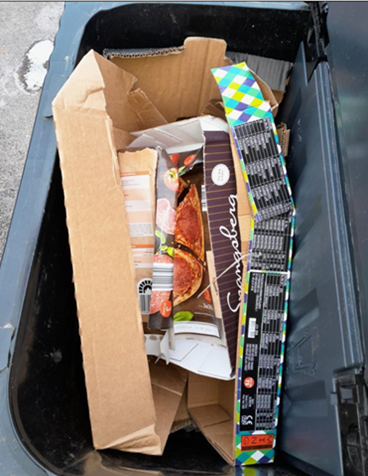
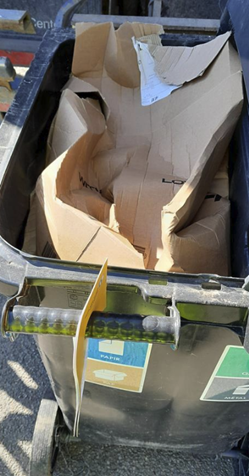
Examples of compacted cardboard causing problems with emptying the container.
-
Who pays for waste collection when there is a change of ownership?
When a property is traded, the real estate agent or lawyer must draw up a reimbursement statement. This reimbursement statement determines what the previous owner and the new owner each have to pay for (among other things) renovations. This is all adjusted via the property tax bill.
-
Are BOFA seats allowed to be swiped?
Yes, it is allowed to make a mess at the recycling centre, but there are certain materials and situations where it is not allowed.
Don't mess with that:
- Electrical scrap: This applies to both small and large electrical appliances, white goods and anything else that is powered.
- Hazardous waste: Neither what's on the table nor what's in the containers should be messy.
- Special container for donation: Containers set up by the Job Centre or other organisations for recycling items are also exempt.
- For sale: It is not allowed to scrap metal for the purpose of resale.
Are you in doubt?
If you are unsure about what is allowed to be worn, ask the site staff.Don't want your stuff to get messed up?
If for some reason you don't want what you bring to the recycling centre to be clumped by others, you can contact the site staff. They can either destroy it with machines or otherwise ensure that clumping does not take place.